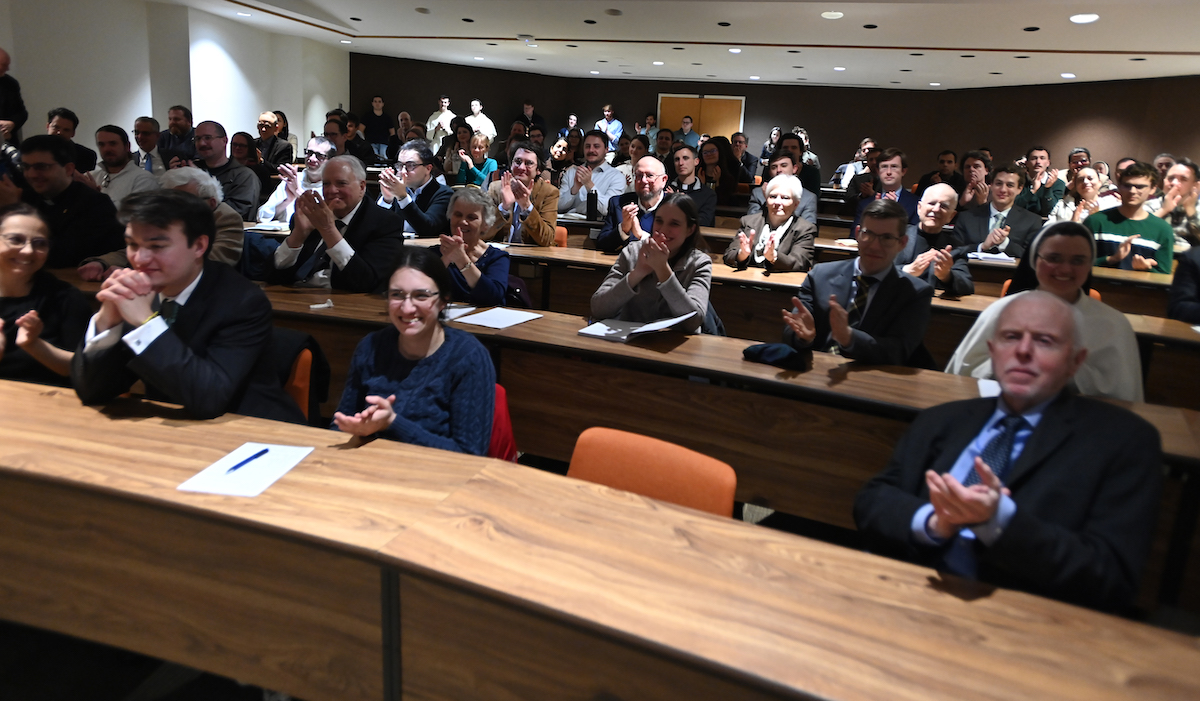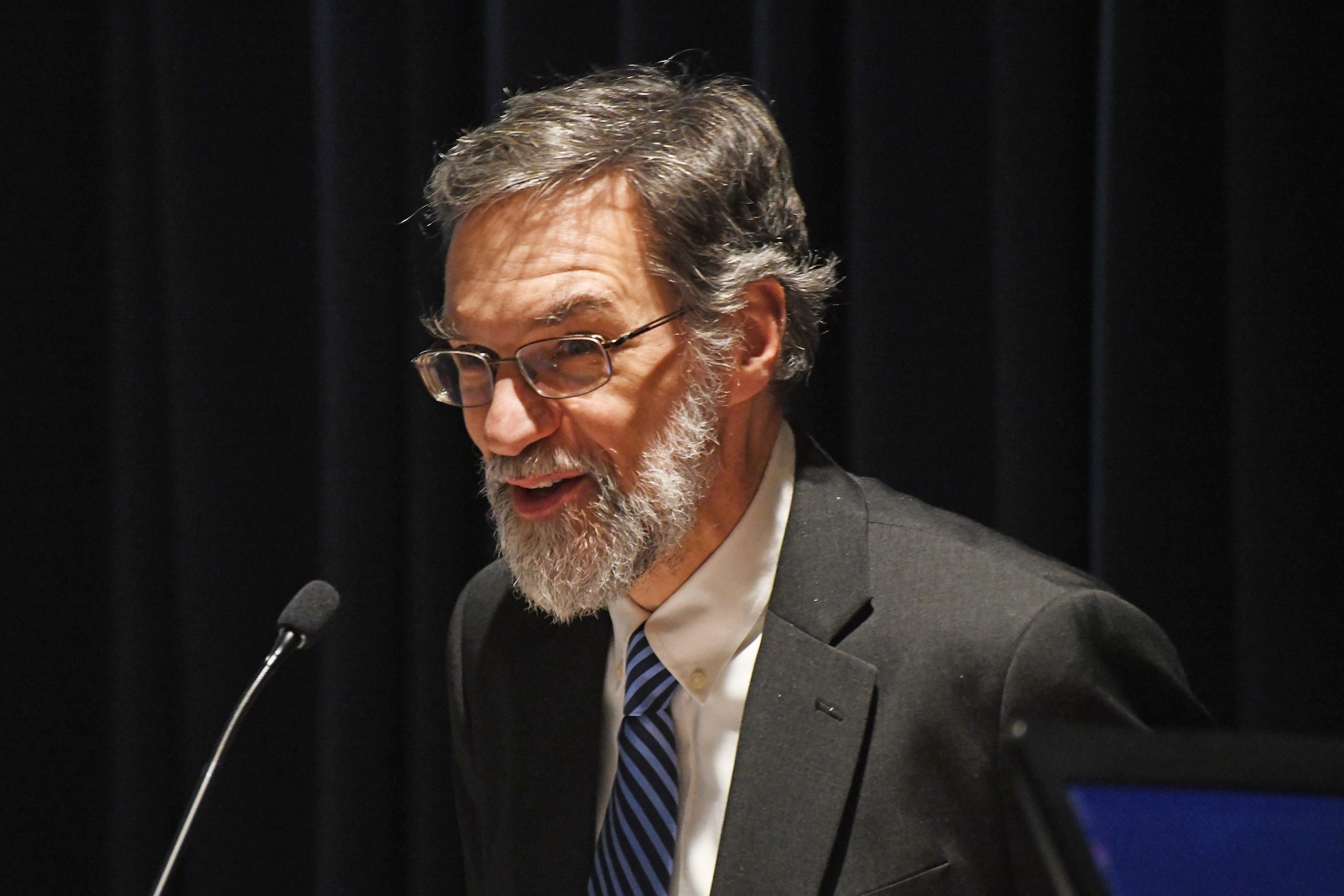
On February 13, 2026, Professor Michael Gorman delivered his first lecture as the Fr. Kurt Pritzl, O.P. Chair of Philosophy to a full auditorium in Aquinas Hall.
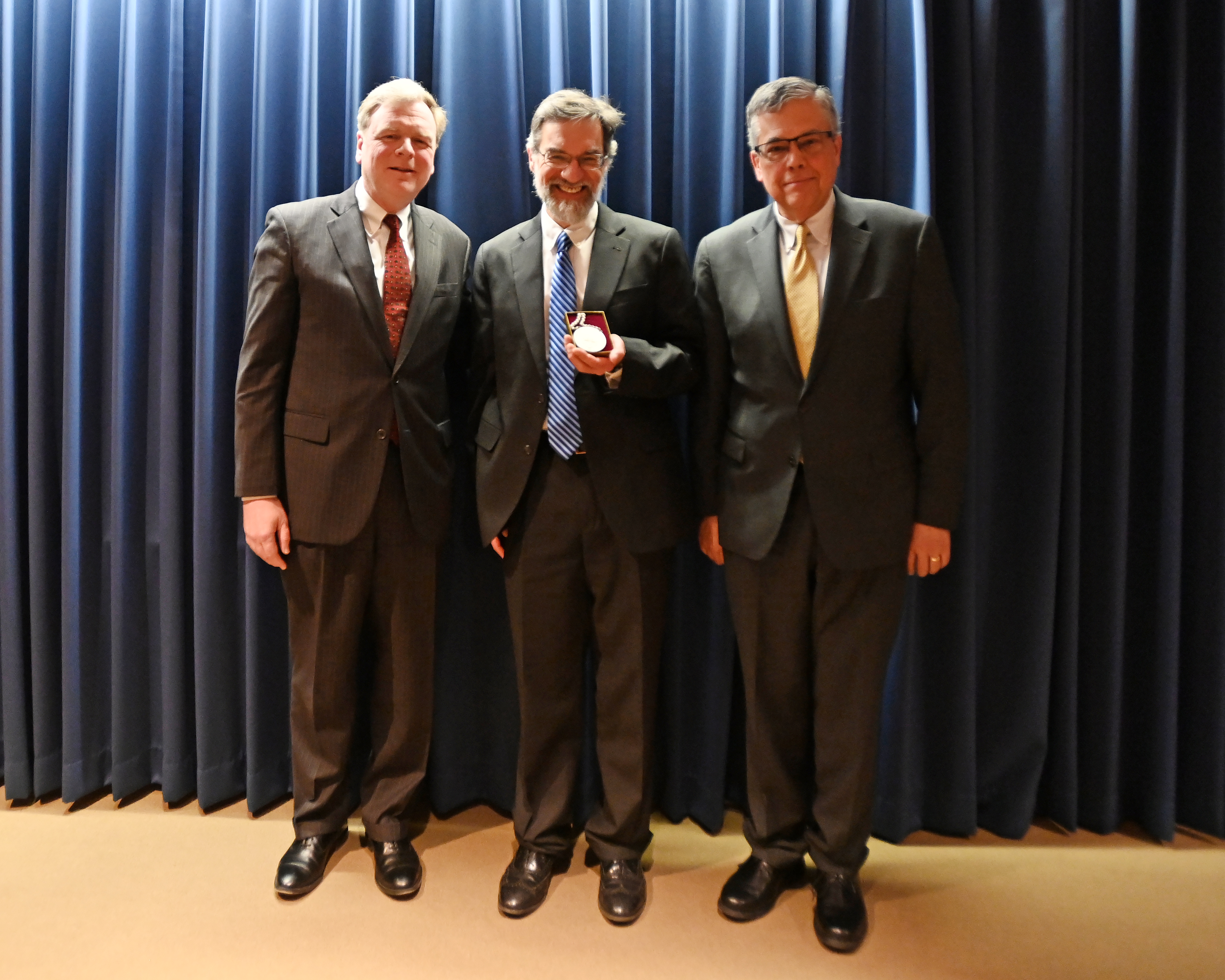
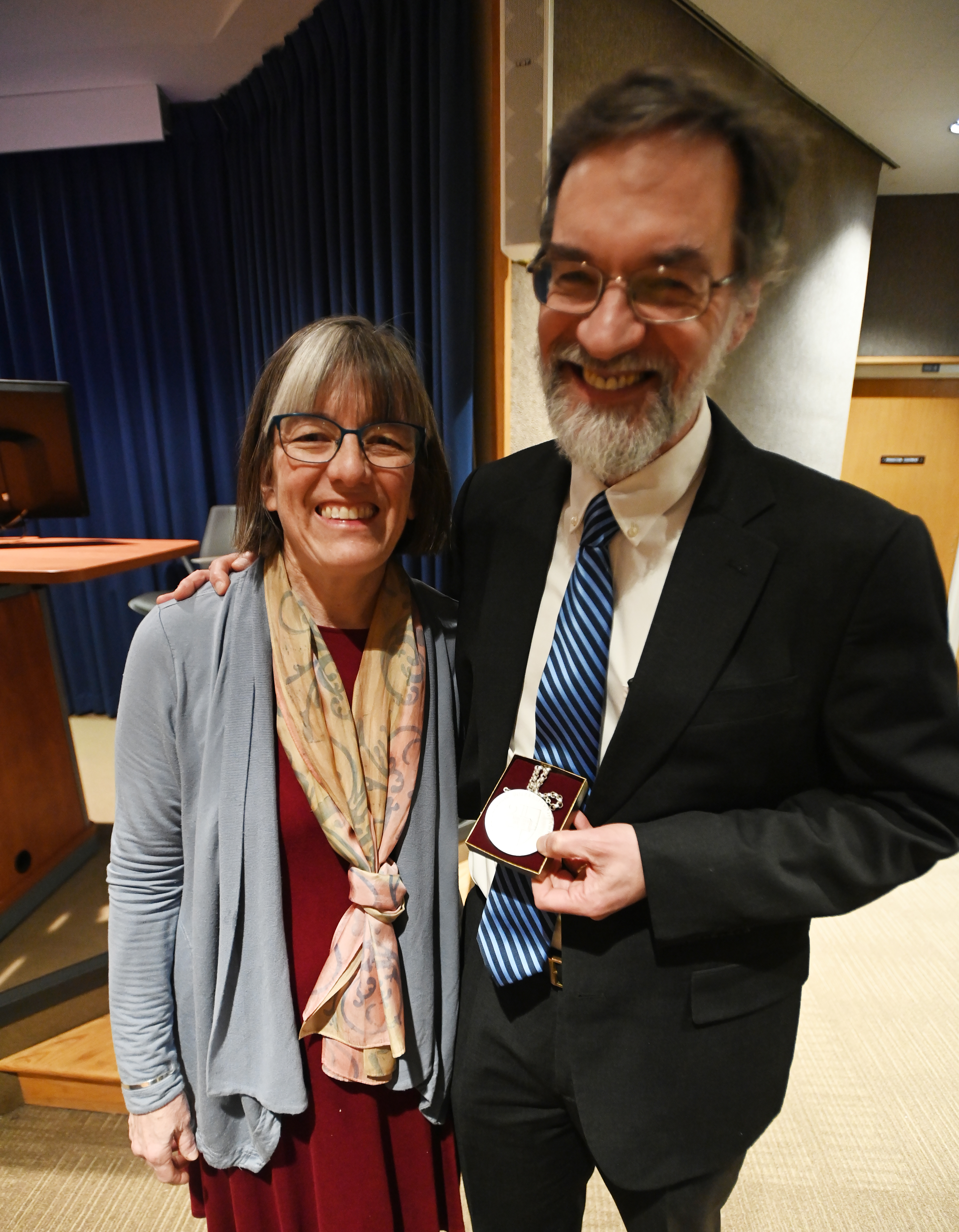
Following the lecture, “On the Complicated Relationship Between Philosophical Thinking and History of Philosophy,” University President Peter Kilpatrick presented Gorman with a medallion representing the honor of being named to the chair.
“In addition to being one of the School’s most successful teachers, Dr. Gorman has been among the most dedicated and tireless citizens of our School and of the University,” said Bradley Lewis, dean of the School of Philosophy. “He is also an exemplary colleague, always willing to talk through a problem or comment on a paper, and always in a way that makes things more clear and more precise.”
Gorman, who joined the faculty in 1999, was named to the Pritzl Chair in “recognition of the excellence of his scholarship, of his incisive, critical and creative intellect,” Lewis said. “The dialogue between faith and reason … takes place in room 212 of Aquinas Hall whenever he is in his office.”
Philosophical Thinking, History of Philosophy, and the Problem of Hallucination
Gorman focused his remarks on the interplay between philosophy and the history of philosophy. The problem of “hallucinating answers” in the face of difficult questions, it turns out, isn’t the exclusive domain of generative AI tools.
“Sometimes,” Gorman explained, “the philosophical texts we have don't allow us to know what our author believes about a certain topic.” This, he argued, is when a student or scholar must be on guard against the temptation to impose an answer.
“When the pressure becomes unbearable, philosophical thinking takes over. We come up with an interesting solution of our own, and then finally – this is the hallucination part – we attribute it to the author we are studying. We see something in the text, but it's not there."
After exploring several common causes for hallucinatory readings – from assuming an author’s infallibility, to the pressures of academic publishing – Gorman offered two solutions.
First, a form of temperance: “[I]f sober reflection reveals that your favorite author says less than you would like him to say, and if this really bothers you, then consider studying other philosophers, and especially later authors in the same tradition."
Second, and more important, fortitude: “Do your own philosophy. Take off your historian's hat and speak in your own voice. In other words, don't just do historical studies; say what you think.”
“In short, let us take more responsibility for our own philosophical thinking,” he concluded. “After all, isn't philosophical thinking what got us into this business in the first place?”